
|
|
A Forgotten Pioneer - A. E. Jones and his Engines This article represents another installment in my series of similar pieces recounting the history of the early years of British model engine design and manufacturing and the personalities who made it happen. I’ve dealt previously with the pioneering power aeromodelling efforts of David Stanger and W. G. Jopson. I’ve also covered the subsequent commercial activities of E. Gray & Son of London, J. Hallam & Son of Poole and Rogers & Geary of Leicester. In this relatively short article, I’ll attempt to summarize the involvement in model engine development and marketing of another of the founding fathers of British aeromodelling, Arthur Edward Jones.
Arthur Edward Jones was born in 1884. I haven’t been able to learn anything about his early life, although he seems to have been born and raised in London. Much of what little appears to be on record is found in an obituary by Lt. Cdr. Alwyn Greenhalgh RN, then the official historian of the Society of Model Aeronautical Engineers (S.M.A.E.), which was published in the April 1979 issue of “Aeromodeller”. My most grateful thanks go to my good mate Gordon Beeby of Australia for drawing my attention to this reference along with a number of others which expanded the story considerably. In particular, Gordon did an amazing job of ferreting out such information as could be found on the 1911 Bonn-Mayer motor which was the subject of Jones' first attempt to market a model aero engine. Thanks, mate! It's logical to assume that Jones’ interest in aeromodelling was stimulated by his observations of the pioneering efforts of such individuals as David Stanger during the early years of the 20th Century. In 1914 at age 30 he joined one of the original British aeromodelling clubs, the Kite and Model Aeroplane Association (est. 1910), but this organization did not long Given this level of organizational involvement in the pioneering aeromodelling movement, it should come as no surprise to learn that Jones also looked to that movement as the basis for making a living. After leaving school, he had gone to work for a firm named J. Bonn & Co. Ltd. of 97 New Oxford Street in London. He must have displayed considerable business acumen, because by 1909 at age 25 he had become the Managing Director of this business, thus effectively being in full control of its activities. His general manager at this time was one Frederick Mayer, of whom we shall be hearing much more very shortly. In a March 1910 letter to "FLIGHT" magazine (est. January 1910), Jones and Mayer claimed that the Bonn company was "an old-established firm", clearly implying that it had been very much up and running when Jones joined it some years previously. During Jones' early years with the company, aeromodelling was still very much a fledgling activity which had yet to be pursued on an organized basis either nationally or locally. This forced the firm to deal in a wider range of goods initially, but as the popularity of aeromodelling steadily grew, Jones steered it increasingly towards the model supply retail trade, thus becoming a pioneer in the development of that area of commercial activity. Indeed, J. Bonn & Co. claimed in their advertising to be "the pioneer firm of Model Aeroplane Accessories", thus staking their claim to being one of Britain's first (if not the very first) aeromodelling supply houses. In addition to supplying plans and construction materials, they produced such accessories as rubber motor winders, airscrews, aluminium wheels, rubber motor gearing components and ball thrust bearing brackets, later periodically adding model I/C engines to their repertoire. A commentary on J. Bonn & Co. which appeared in the September 7th, 1911 issue of the rival magazine "The Aeroplane" (est. 1911) stated that they carried out all their wood and metal working on their own premises in their "very complete and up to date" workshop. Jones' First Engine Offering- the Bonn-Mayer Motor
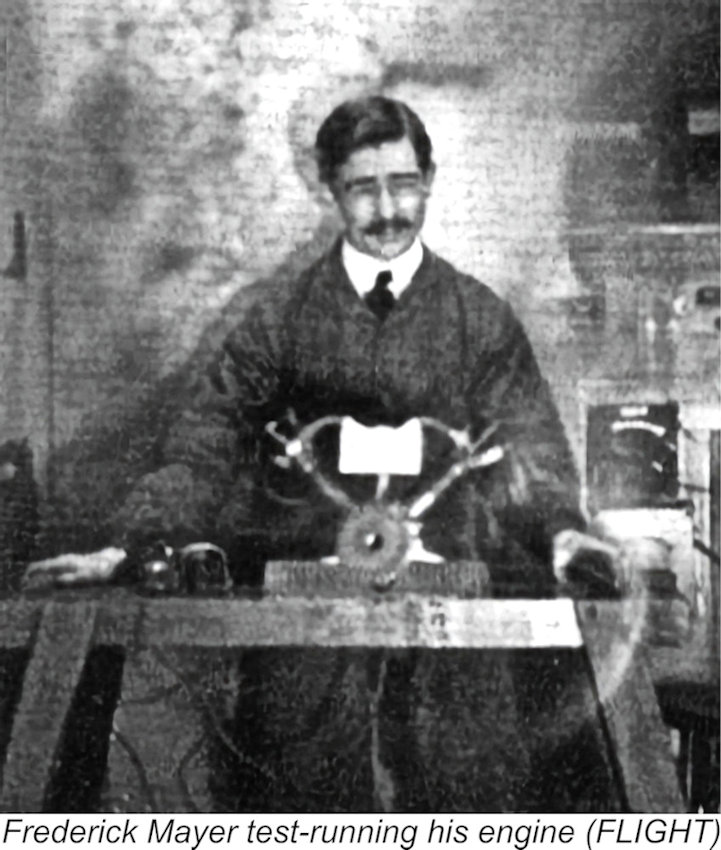
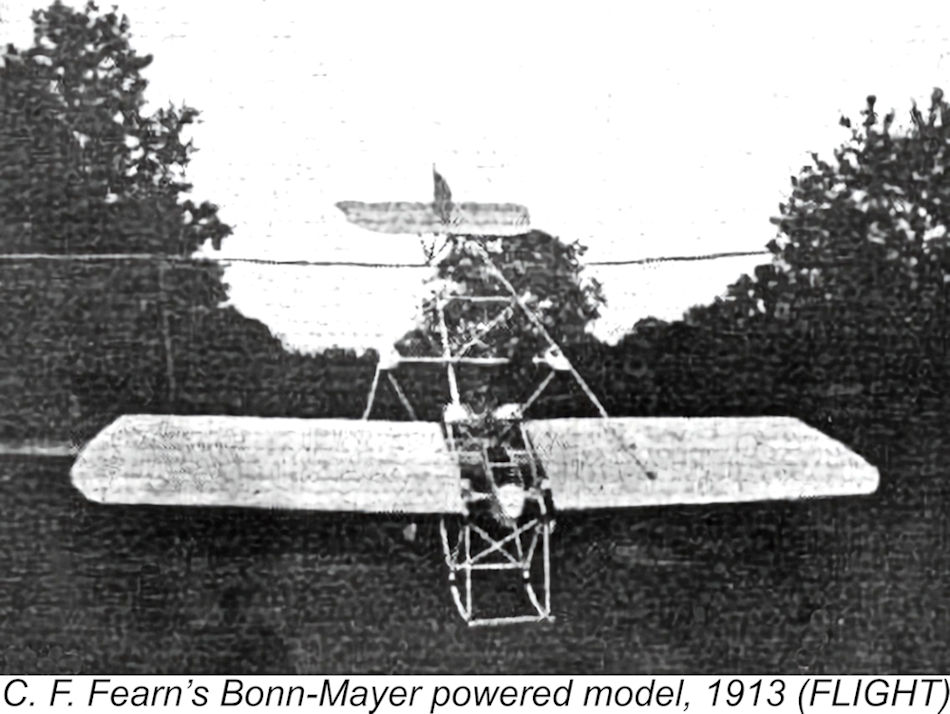
An image of Mayer posing with his test model appeared in the June 22nd, 1912 issue of "FLIGHT". Despite the poor quality of this 114 year-old photo, it seems well worth reproducing here since it gives some idea of the truly monumental size of these early "models"! Mayer is seen kneeling inside the fuselage of his 13 ft. wingspan monoplane, which looks to modern eyes to be more of an unmanned full-sized aircraft than a model! All-up weight of this leviathan of the air was 41 pounds! When it comes to storing and transporting such a behemoth, sooner him than me!!
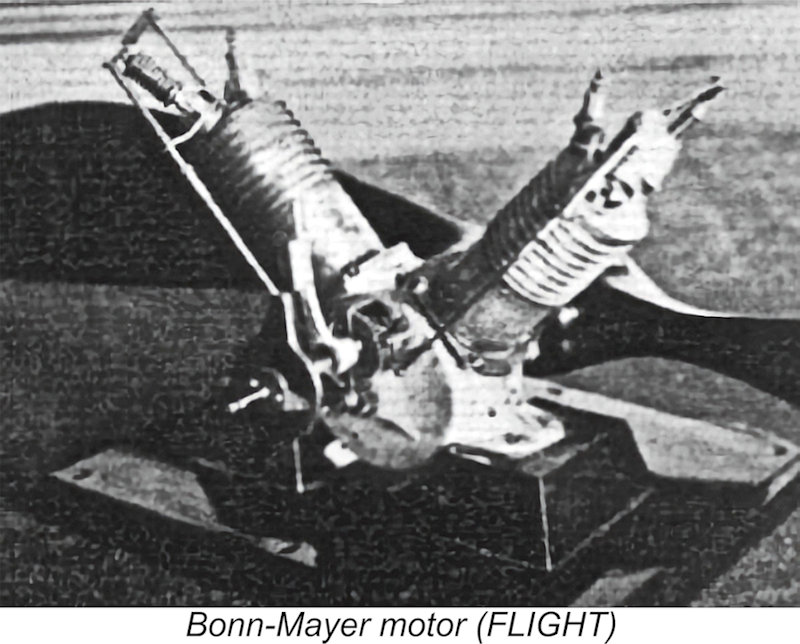
Further commentary on the Bonn-Mayer engine was scattered among a number of subsequent issues of "FLIGHT". To summarize, the engine's bore and stroke were 1¾ in. and 2 in. (44.45 mm and 50.80 mm) respectively for a combined displacement for the two cylinders of 157.68 cc. The cited weight was 97.5 ounces without prop, fuel and ignition support system.
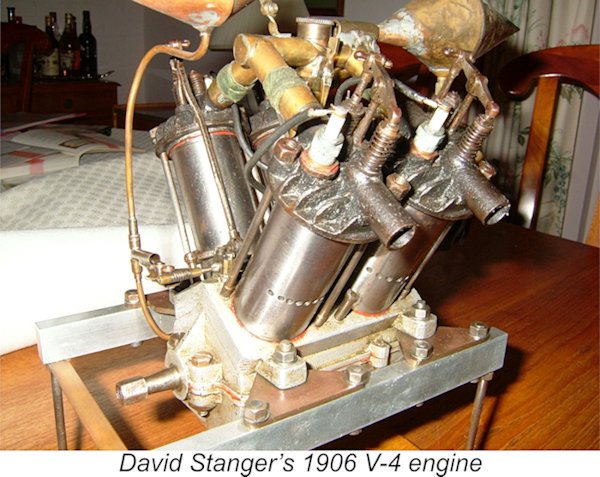
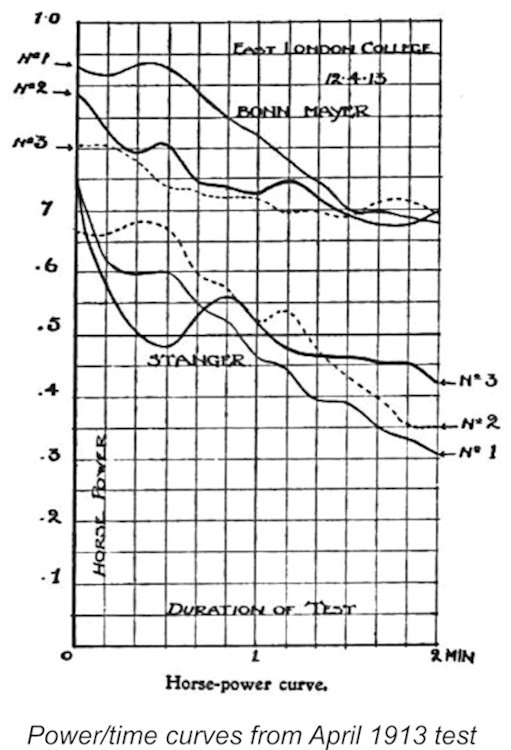
Mayer's model and engine were exhibited at the February 1913 International Aero Exhibition held in London at Olympia, West Kensington, where the engine itself was awarded a Silver Medal. In connection with this event, the Royal Aero Club had offered a £5 prize to the builder of any exhibited model aero engine which In the event, only two of the Olympia exhibitors presented their engines for testing. These were Frederick Mayer with his 158 cc Bonn-Mayer V-twin and David Stanger with his ground-breaking 120 cc V-4 which had been constructed as far back as 1906. I've summarized Stanger's remarkable accomplishments in a separate article to be found on this website. The tests were conducted on April 12th, 1913 at the East London Technical College on Mile End Road under the supervision of Professor J. T. Morris.
Each entrant was allowed three runs of two minutes' duration to attempt to extract the best performance from his engine, making this a "best of three" competition. Both engines reportedly completed "three very good runs without hitch of any kind."
The performance curves published in association with this test show that speed, and hence power output, fell off quite considerably as the engines became hotter during the course of the prescribed two-minute runs. Cooling efficiency was thus an important factor in relation to a given engine's performance over the duration of a flight. It's highly likely that more consistent results would have been obtained if slipstream-generating airscrews had been used instead of air-brakes. The reported performance of the Bonn-Mayer fell well short of J. Bonn & Co.'s own previously-quoted claim of 1½ BHP @ 1,500 RPM. This prompted a further commentary which appeared in the May 17th, 1913 issue of the magazine. The writer noted that both engines had developed power outputs which were "considerably less, I believe, than was commonly supposed." However, he stated quite correctly that "although both the motors have failed to fulfil the conditions laid down, both have been successful in actually flying machines, which is, after all, the real test." Perhaps the most insightful observation made by this writer was his comment that this competition had demonstrated that "models are more efficient (since less power is required to fly them) than was heretofore supposed." Put another way, the Bonn-Mayer engine had successfully flown considerably larger and heavier models than its actual measured power output would have led anyone to expect. The same was true of the Stanger V-4. The writer concluded that the conditions laid down for the competition had been unwarrantably severe. He was pleased to note that the Royal Aero Club was then offering another prize for a similar competition, which he hoped would attract more entries.
The measured performance fell somewhat short of that reported from the earlier test. On this occasion, the Bonn-Mayer engine averaged an output of 0.69 BHP during the course of a two-minute run, with an instantaneous peak of 1.11 BHP ten seconds into the run. At the end of the two-minute run, this had dropped to only 0.60 BHP. After the completion of the two-minute air-brake test runs, the engine was subjected to a run of over 4 minutes using a 42x23 airscrew, which was spun at a fairly steady 1,100 RPM throughout the run, with a brief excursion up to 1,200 RPM near the end. This seems to confirm the previously-stated suspicion that the air-brake tests were severely handicapped by the absence of an effective cooling slipstream.
Unfortunately, by this time the clouds of war were already darkening the horizon, and no more was to be heard of the Bonn-Mayer motor. It's likely that a few more examples were built and sold, but there's no way of getting a reasonable handle on their number, which cannot have been large. I'm not currently aware of any surviving examples.
Clearly wishing to "do his bit" for the war effort, the 28 year-old Frederick Mayer left Jones' employ at the start of the war, moving initially to the Royal Aircraft Factory's main research facility at Farnborough and later being seconded to the British & Colonial Aeroplane Co. (later the Bristol Aeroplane Co.) as chief engine examiner. He then served in the Royal Flying Corps (RFC) for the rest of the war as a test engineer at the RFC's aircraft acceptance facility at Filton, Bristol. After the war, he re-joined the Bristol company, serving in their engine division as their chief installation engineer until his retirement in late 1953 at the age of 67 years. After the war, Jones continued trading as A. E. Jones Ltd. from the same New Oxford Street address. By that time his shop had become an industry-leading retail source of aeromodelling goods – he was among the first British retailers to offer balsa wood to British aeromodelling enthusiasts, for example. He also marketed an early range of flying model kits along with a wide range of accessories and materials. Jones' Second Engine - the Improved Atom Minor
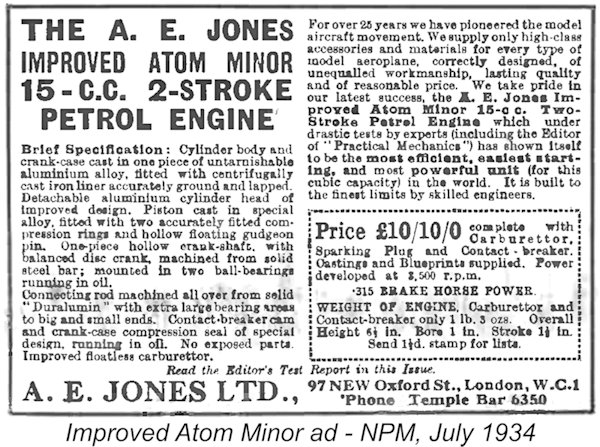
Whoever manufactured it, the engine was reportedly produced to a very high standard of quality. It was released for sale to the public in mid-1933 under the designation “Improved Atom Minor”, reflecting the improvements incorporated by Jones in the production version of the engine. This made it one of the very first new British-made model aero engines to be released to the public on a commercial basis between the two World Wars – the only earlier such British products of which I’m aware were the Grayson and Grayspec aero models introduced by E. Gray & Son of London between 1931 and 1933. It didn’t take long for Jones’ new offering to attract the attention of the model engine reviewers of the day. First out of the starting gate was “FLIGHT” magazine, which published an unattributed review of the engine in its November 1933 issue. Not to be outdone, the July 1934 issue of “Newnes Practical Mechanics” (NPM) magazine included an article by Editor Frederick J. Camm in which the Improved Atom Minor was discussed in some detail. In addition to the above reviews, Jones' advertising for the engine was unusually descriptive of its main features. With these resources at our disposal, it’s possible to provide a fairly detailed description of this ground-breaking engine. Let’s have a go ……….! The Improved Atom Minor – Description
The engine’s quality and the amount of work which went into each example were reflected in the price, which was a whopping £10 10s 0d (£10.50). For context, an average British working man at this time would have counted himself fortunate to be earning £4 a week, or even to be working at all given the effect of the ongoing Great Depression. These engines were definitely rich man’s toys! To offset this somewhat, the engine could also be purchased as a set of castings and blue-prints for home construction. According to information published in the November 1933 issue of "FLIGHT" magazine (see below), the cost of the engine in this form was a far less daunting 10s 6d (£0.53). However, the purchaser then had to put in a great deal of highly skilled work in order to turn the castings into a finished engine. To most present-day modellers, the idea of purchasing an engine in basic casting form might seem more than a little odd. However, it must be understood that m Moreover, the level of active British participation in model engineering was then far higher than it became later. A surprising number of model enthusiasts possessed some basic metalworking equipment such as a small lathe, or had access to such equipment through their places of work. The prevailing level of British involvement in model engineering at the time in question was sufficient to support the publication of a magazine devoted exclusively to the activities of its practitioners. At the time of which we are speaking, this magazine was entitled “Model Engineer & Practical Electrician”, later shortened to just “Model Engineer” (ME). Established in 1898 by its publisher Percival Marshall, the magazine is still in publication today (2025) under the title “Model Engineer & Workshop”, albeit now owned by Mortons Media Group. The ready availability of low-cost machine tools from China and Taiwan has triggered something of a latter-day resurgence in this long-established hobby.
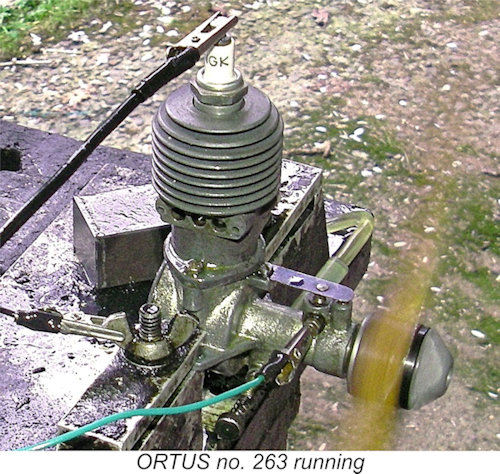
The engine presented a number of unusual features by the standards of the day. For one thing, its crankshaft was supported in two ball bearings - one of Jones' more substantial improvements. As far as I’m aware, this was the first British model aero engine to exhibit this high-class feature – in fact, it was one of the first anywhere! For another thing, the original Atom Minor's automotive-type open-frame timer was replaced in Jones' "improved" version by a relatively sophisticated device operated by a cam-activated plunger, rather similar to that used later on early versions of the Baby Cyclone of late 1935. Fair enough, but the main anomaly was the absence of any means of adjusting the ignition timing – it was what it was! The engine was clearly expected to operate at very low RPM – Jones claimed The fixed-timing idea was not unique to the Improved Atom Minor – the original 5.88 cc Baby Cyclone of late 1935 also exhibited this feature, as did the very similar German ORTUS 5.67 cc unit of 1939. My ORTUS starts and runs just fine using its fixed ignition timing. The Improved Atom Minor was built up around an aluminium alloy main casting which incorporated the cylinder barrel with cooling fins, the bypass passage and the main crankcase. Cross-flow loop scavenging was employed. The exhaust stack was a separate bolt-on affair which was directed to the left side of the engine (looking forward in the direction of flight). The finned light alloy cylinder head was seemingly at least partially formed integrally with the cylinder barrel - another of Jones' modifications from the original, which had used a tall separate bolt-on head. It's not clear how the liner in Jones' rendition of the engine was installed and retained. Both the front and rear covers were secured with four long threaded studs which passed through fore-and-aft holes in the crankcase edges and were tightened with nuts at each end. As was so often the case with early model aero engines, little thought appears to have been given to mounting the engine in a convenient manner – no mounting lugs of any sort were provided. The engine was evidently intended to be radially mounted using the four cover retaining fasteners. The twin-ringed light alloy piston operated in a centrifugally-cast iron liner. It drove the crankshaft through a hollow fully floating gudgeon pin with end pads and a light alloy conrod which was fully machined from solid dural stock. The steel crankshaft was machined in one piece with the centre hollowed to eliminate a little weight, also being provided with a counterbalanced crankweb. Finally, the engine was provided with a spray-type carburettor which did not incorporate a float chamber. It appears from the photographs that some kind of throttling device was incorporated into the induction tract on the engine side of the needle valve. The engine was not equipped with a tank of its own. Lubrication was taken care of through the use of a normal two-stroke petrol/mineral oil fuel mixture. The Improved Atom Minor under Media Review
The unidentified writer of the article was clearly very impressed with the Improved Atom Minor. Jones apparently went so far as to make a demonstration run of the engine right there in the office, understandably drawing the attention of practically the entire office staff to his efforts, including the magazine’s Technical Editor! On this occasion, Jones cited a peak output of 1/5 BHP at around 3,500 RPM. The company’s later advertising cited a higher figure of 0.315 BHP, still at 3,500 RPM, making it seem possible that some further improvements were incorporated as time went on. After describing the engine, the writer commented on its very steep selling price of £10 10s (£10.50), admitting that this was “not cheap”. However, he justified this price by stating that “nobody who has examined the engine and realized fully the amount of work that has been put into it can say that this price is extortionate.” He noted that Jones’ goal was not to provide a cheap engine but rather to supply a quality product having a high level of structural integrity, performance and durability over the long haul. The next appearance of the Improved Atom Minor in a media review came in the form of an article in the July 1934 issue of “Newnes Practical Mechanics” (NPM) magazine. This article was written by the magazine’s Editor Frederick J. Camm, who effectively doubled as the magazine’s primary aeromodelling commentator. Camm was then in the process of constructing his own example of the engine from castings, hence being very appreciative of the opportunity to try one of Jones’ ready-made examples for himself.
Camm found that the engine ran perfectly in two-stroke mode. He commented in particular that the Improved Atom Minor was easily “throttled down” to a reduced speed – a useful characteristic for trim flights, etc. Unfortunately however, he stopped short of reporting any actual performance data such as prop/RPM figures. At the end of an arduous two-day testing period, the engine reportedly exhibited “no signs of wear”, while the compression “if anything, had improved.” The latter comment doubtless reflected the bedding-in of the piston rings as the running time accumulated. Camm was as impressed with the engine as his predecessor at “FLIGHT” magazine had been. He summed up his impressions by stating that “I like the design throughout, which has evidently been very carefully thought out.” It’s clear from a reading of the above two reviews that the Improved Atom Minor was a well-designed high quality unit which started and ran very well, offered the prospect of a long working life and had a good performance by the standards of its day. The main thing that it had going against it was its price, which would have greatly limited its potential customer base. The available competition from such lower-priced engines as the £4 16s (£4.80) Grayspec 14.5 cc model from E. Gray & Son would not have encouraged sales attention from consumers. Follow-up – the Andrich 9 cc Model The problem with engines such as the 14.5 cc Improved Atom Minor, the 1933 Grayspec 14.5 cc model, the Hallam 13.5 cc model of 1934 and the 18 cc Rogers & Geary Comet of 1935 was the inescapable fact that they required very large models to accommodate them. Such models typically had wingspans of 6 or 7 feet, hence consuming significant quantities of costly construction materials which made them very expensive to build. They also needed a large construction area in the home. As if this wasn't enough, they were also extremely challenging to transport to and from the flying field – bicycles or buses need not apply! Finally, their storage at home took up an inordinate amount of space. For these reasons, aeromodellers soon began to take a very positive view of the notion of using engines of smaller displacement which would allow the construction and operation of somewhat smaller models. The famous British firm of Stuart Turner Ltd., best known for their extensive range of steam engine casting sets, took the lead in late 1934 when they began to import and market the American-made 10 cc Brown Junior in Britain. At a selling price of £6 10s (£6.50) all inclusive, the Brown Junior undercut the Atom Minor by a very considerable amount. It was also somewhat smaller and a great deal lighter, opening up the possibility of its use to power smaller models of a more practical size. The writing was on the wall for the larger engines of 15 cc or more.
The Andrich was a 9 cc sideport unit whose bore and stroke measurements never appear to have been reported. However, a considerable amount of information on this engine is available thanks to the fact that it was reviewed twice in the contemporary modelling media. The first of these reviews appeared in the January 1935 issue of “FLIGHT”, while the second review followed shortly thereafter in the March 1935 issue of NPM. The fact that both reviews were almost identically worded suggests that they were summaries of the same information provided by the manufacturer. From these reviews we learn that the 9 cc Andrich engine weighed a commendably light 8 ounces complete with plug and fuel tank but minus the ignition support system. The engine was built up around a main casting of aluminium alloy which incorporated the main bearing housing in unit. The blind-bored cylinder was turned from a steel billet and incorporated integral cooling fins. The light alloy piston was equipped with two rings. The hollow steel gudgeon pin was fitted with bronze end-pads and engaged with a conrod which was fully machined from a dural billet. The steel crankshaft ran in a cast iron bushing. The makers claimed that the engine would turn a 13½ in. dia. x 12½ in. pitch airscrew at 3,600 RPM, at which speed its output was estimated to be around 0.125 BHP. A 6:1 gas/oil fuel mixture was recommended. The engine’s selling price was set at £6 6s (£6.30), thus slightly undercutting the Brown Junior. This was a considerable improvement over the £10 10s (£10.50) price tag of the Atom Minor, although it would still represent a major investment for the average British aeromodeller in 1935. Moreover, the competition from less expensive contemporary offerings such as the £3 3s (£3.15) Hallam Nipper 6 cc model would have significantly inhibited the Andrich's sales prospects. The Later Years
Hallam & Son reacted promptly to this market trend by bringing out their 6 cc Nipper in late 1935. E. Gray & Son were a little slower to react to the situation, but they eventually did so by introducing a 3.5 cc two-stroke model called the Grayson Gnome in September 1936. In December 1936, Rogers & Geary announced their intention to release an even smaller model, the 2.31 cc Spitfire, although this didn’t actually hit the market until April 1937. Arthur Jones evidently decided that he was not interested in joining this race to the lower displacements. Both the Improved Atom Minor and the Andrich engines which he had promoted had clearly reflected his dedication to the principle of building up to a standard of quality rather than down to a price. He was clearly unwilling to abandon his commitment to the concept of "quality first" in order to match the lower-priced competition from other manufacturers which was then emerging. In any case, by 1936 Jones was 52 years old and was ready for a change. It was in that year that he closed his London shop, also presumably ending the production of the excellent but uncompetitively-priced Atom Minor and Andrich model engines. He relocated to Bournemouth, where he hoped to re-establish himself in the model trade. However, a combination of health issues and the onset of WW2 frustrated this ambition. Jones recovered from his pre-WW2 health issues, eventually reaching a ripe old age and remaining active in the aeromodelling movement right into the 1970’s. His final appearance at a major event came when he was 88 years old at the reception held at the United Services Club on November 22nd, 1972 to mark the Golden Jubilee of the S.M.A.E. At that event he was presented to HRH the Duke of Edinburgh and was presented by the Duke with his S.M.A.E. Fellows Certificate, becoming the organization’s Senior Fellow. Arthur Jones finally passed away in March 1979 at the grand old age of 95. He was remembered by all who knew him as a courteous and considerate gentleman who was always tolerant and kind to others. He had also done more than most to foster the development of aeromodelling into the organized movement that it became. A credit to our hobby! ____________________ Article © Adrian C. Duncan, Coquitlam, British Columbia, Canada First published April 2026 |
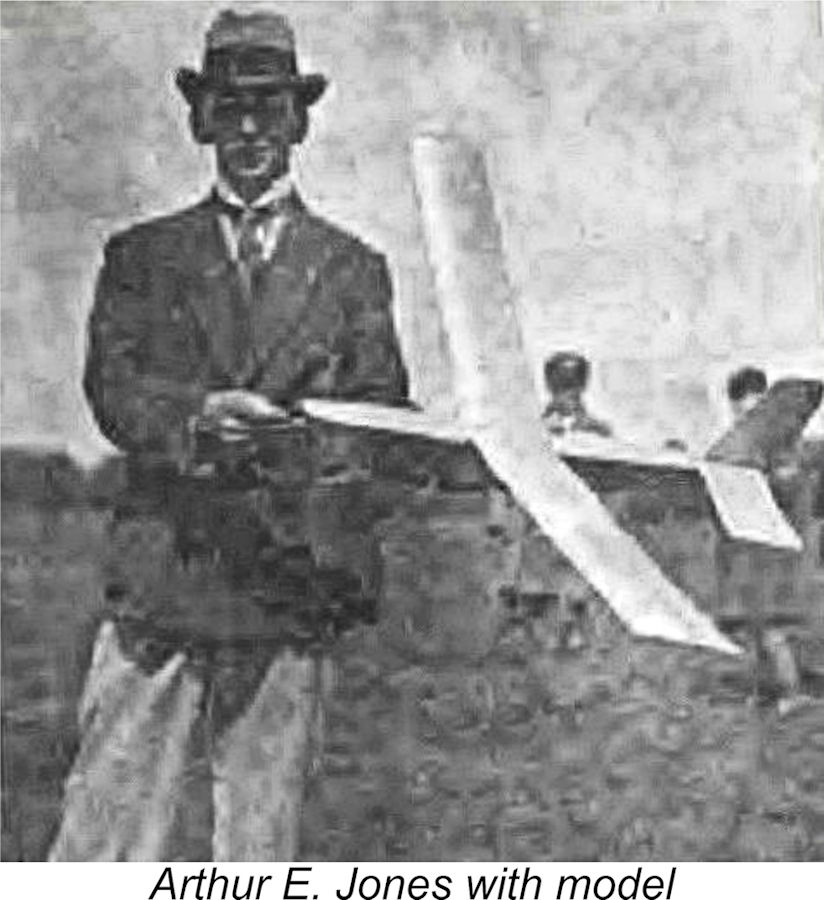 This individual’s name is more or less completely forgotten by today’s aeromodellers. This is really uncalled for, because Arthur Jones was one of the prime movers in the early organization of British aeromodelling. He was also a key player in the early development of the British model retail trade, also having a brief but significant involvement in the pioneering years of the British commercial model engine manufacturing industry. High time that his story was told!
 survive the WW1 years. Jones served subsequently as the inaugural Chairman and Hon. Secretary of the London Aero-Models Association which was founded in December 1921 to carry on the work of the defunct Kite and Model Aeroplane Association. When the London Aero-Models Association in turn was re-constituted as the Society of Model Aeronautical Engineers (S.M.A.E.) in August 1922, Jones served as its first Hon. Secretary for three years from its establishment down to mid-1925.
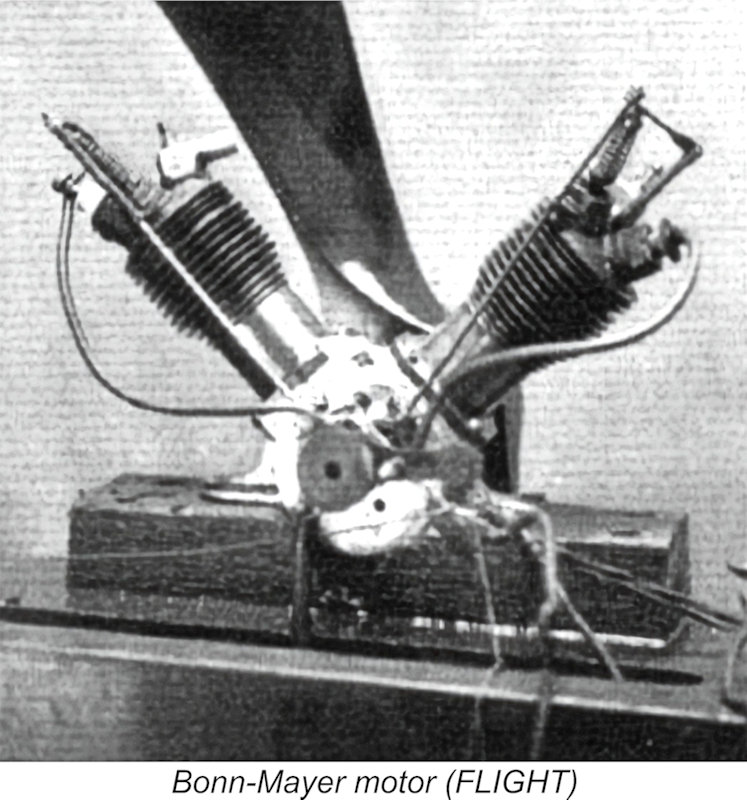 It was during Jones' tenure as Managing Director that his general manager Frederick Mayer (b. 1886) designed and constructed a large four-stroke V-twin model aero engine which was to be sold exclusively by Bonn & Co., hence being named the Bonn-Mayer engine. A letter about this unit from J. Bonn & Co. Ltd. (presumably written by A. E. Jones as general manager) appeared in the December 30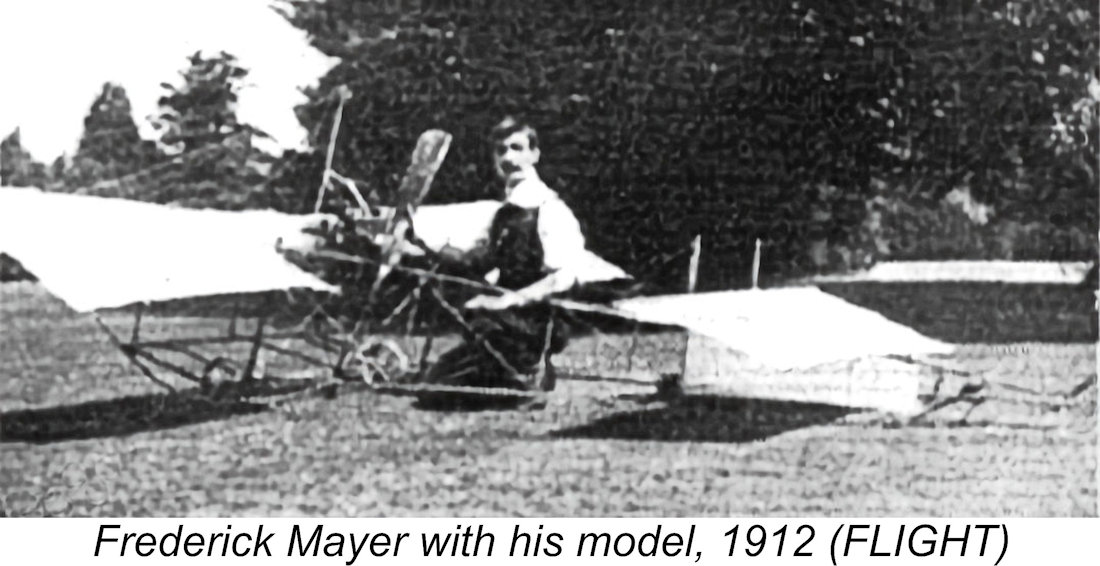
 The calibration of the air-brakes was completed in time for the final results to be published in the May 10
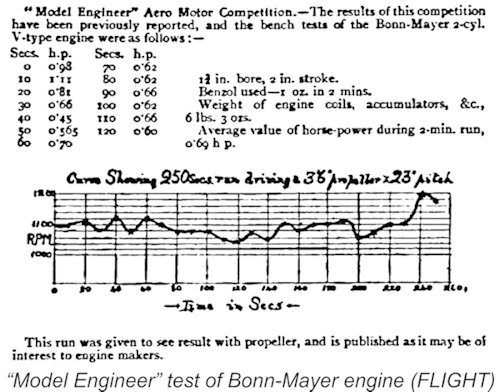 The Bonn-Mayer engine was also exhibited at the October 1913 Model Engineer Exhibition. As in the case of the earlier exhibition described above, the exhibitors had to submit their displayed units for testing. These tests were once again carried out at the East London Technical College.
 The October 25
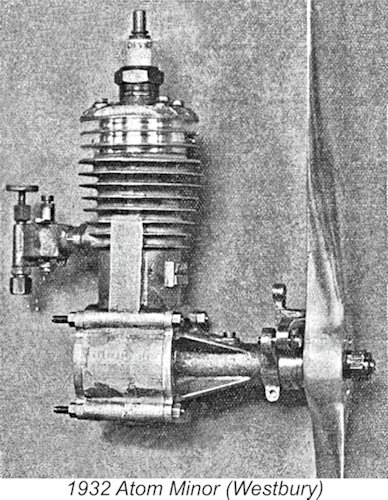
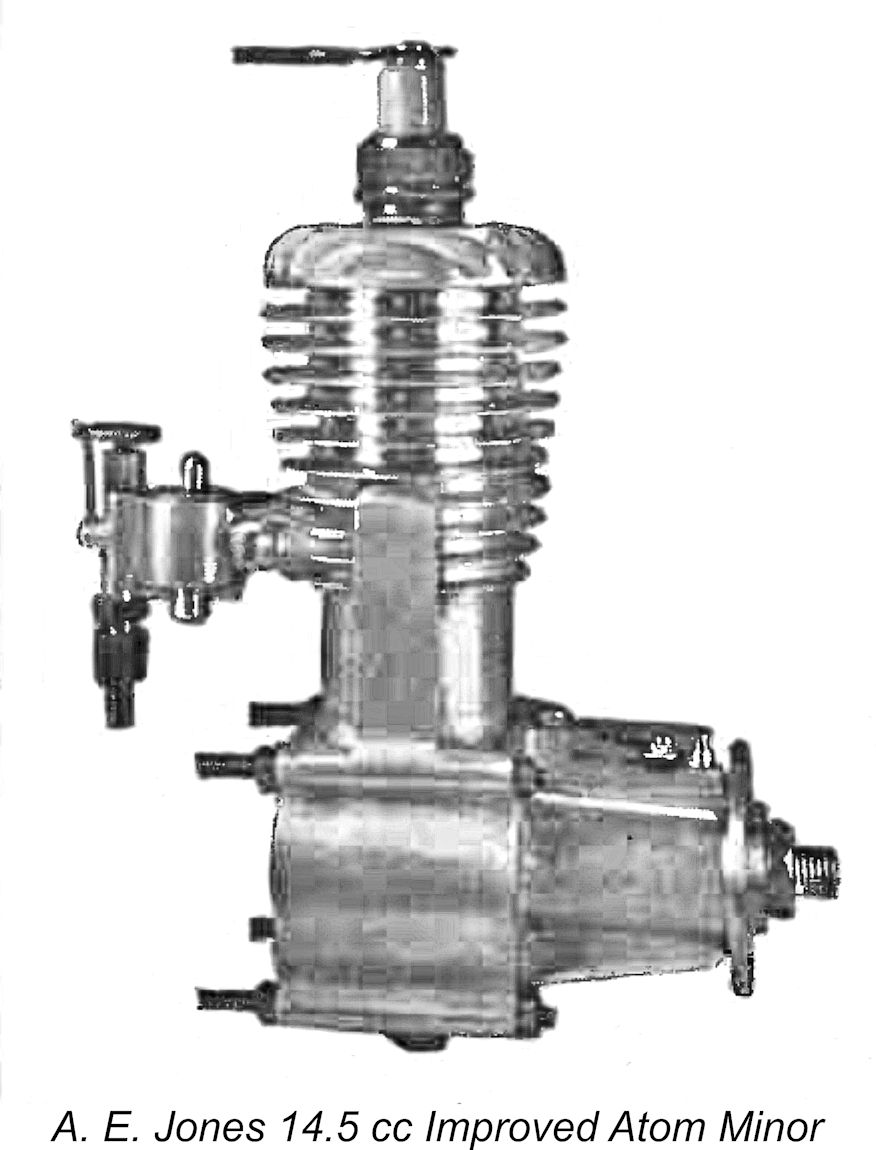 The Improved Atom Minor exhibited a number of quite significant design changes from the Westbury original. It was a handsome-looking 14.48 cc sideport spark ignition engine, actually having an external appearance which was somewhat ahead of its time. Both reviewers were in agreement that the engine as supplied complete by Jones was constructed to very high standards.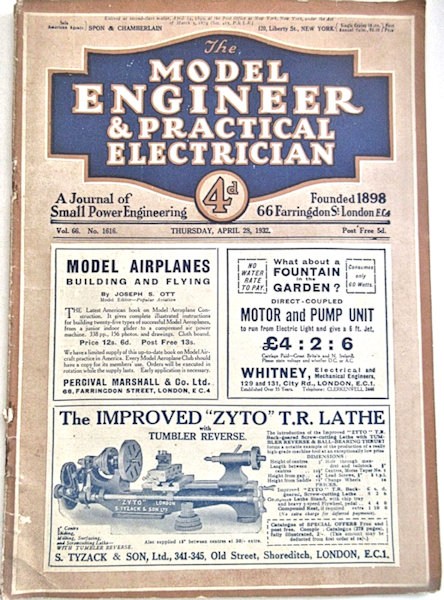
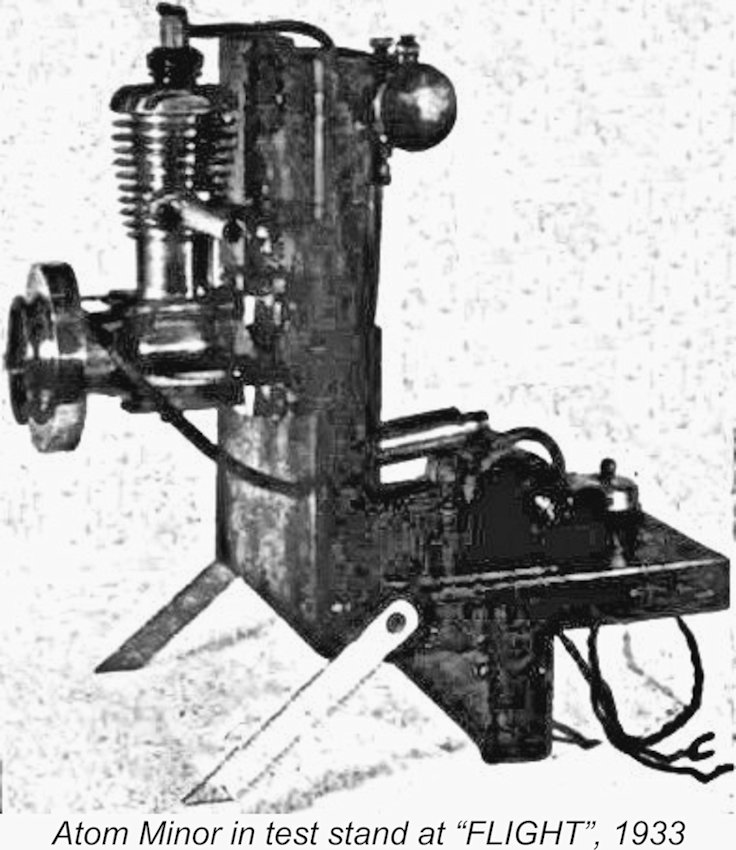 As stated earlier, the Improved Atom Minor was first reviewed in the November 1933 issue of “FLIGHT” magazine. It appears that Arthur Jones brought an example of the engine to the magazine’s offices for their review and inspection.
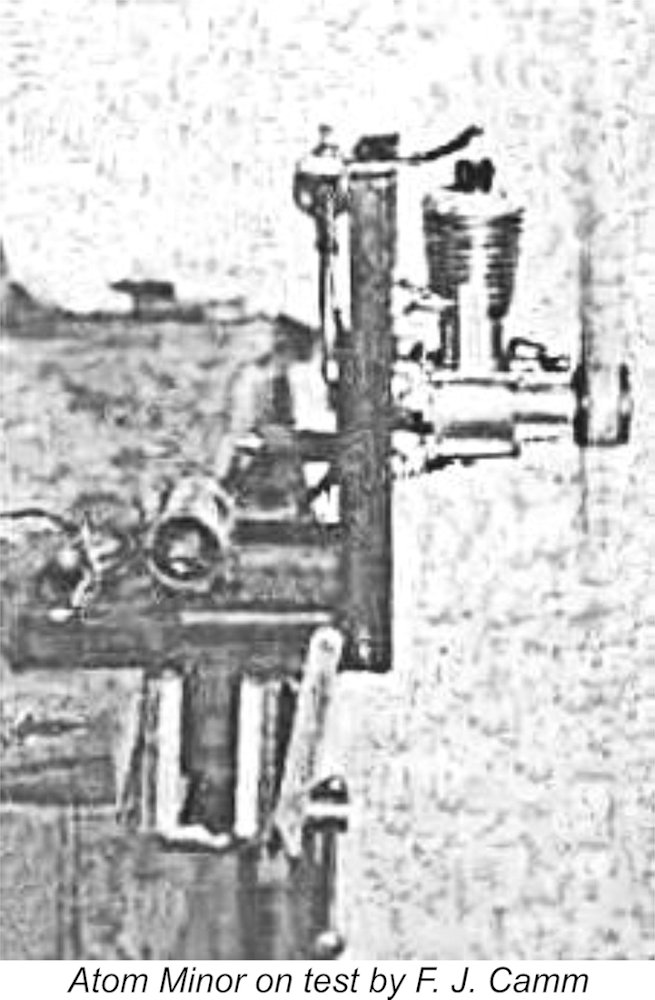 The engine endeared itself to Camm immediately by starting on the first flick from cold. Thinking that this might have been a rather fortuitous circumstance, Camm allowed the engine to cool down completely and then tried again – same result! This behavior continued over a full two-day testing period, with more than one starting flick being required very rarely.
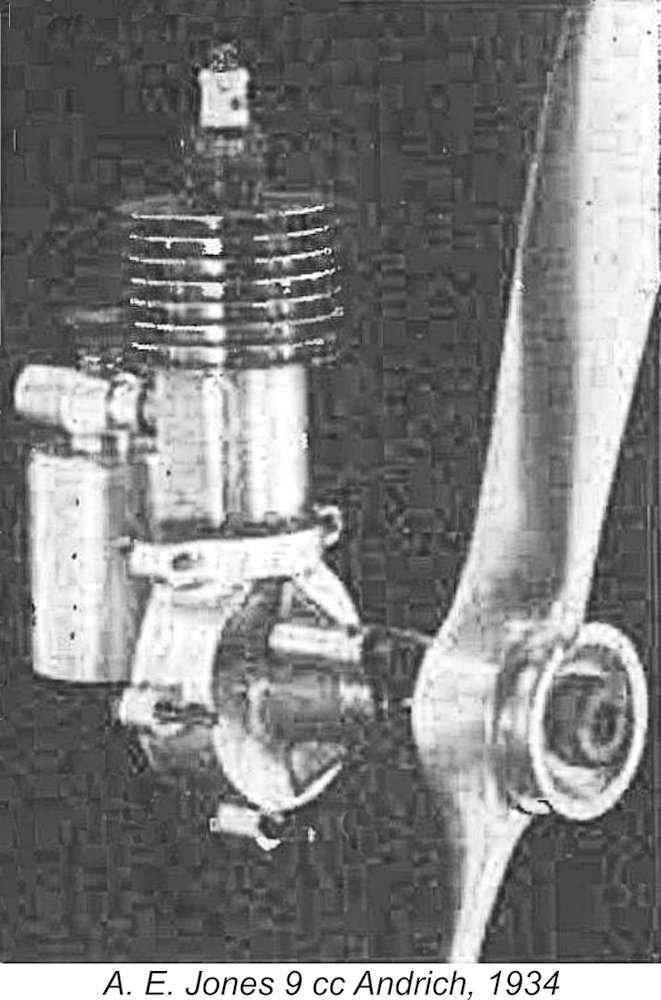 Recognizing this, Jones introduced a smaller engine called the Andrich in late 1934. Once again, it’s unclear exactly who designed and manufactured this engine, but Westbury’s name was never mentioned in connection with it. Moreover, the design of the Andrich owed very little to that of the Atom Minor. The name actually suggests that an individual named Andrich may have designed it, but there’s no hard evidence for this.
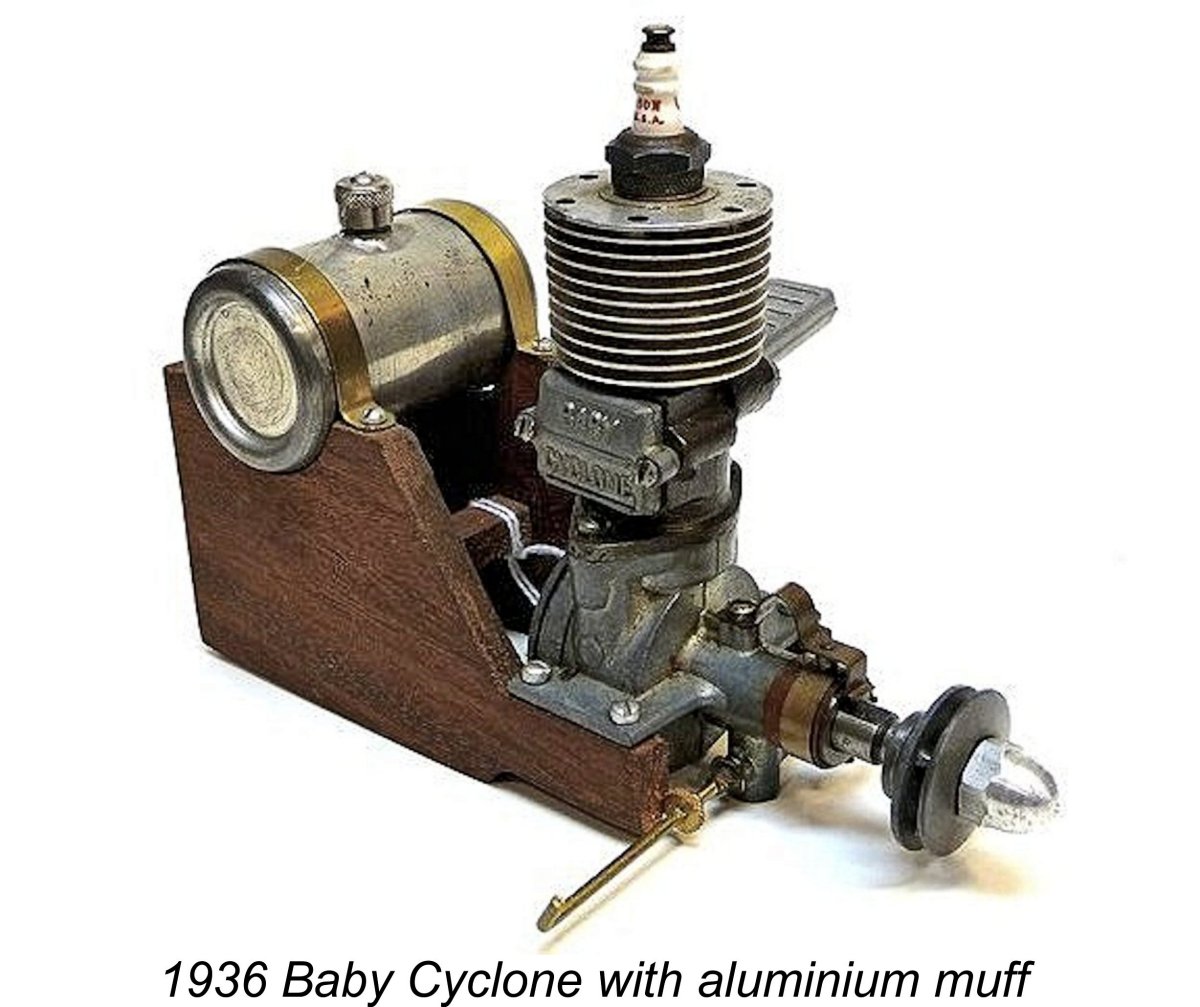 The introduction of the Andrich engine undoubtedly represented a step in the right direction. However, the trend towards even smaller engines and models continued unabated. The advent of motors like the enormously influential 0.359 cuin. (5.88 cc)
 | |