
|
|
From the Ashes of WW2 – the O.S. Type 10 Sparkie
The classic O.S. glow-plug engines from the 1950’s through to the present day are relatively well-known and adequately documented. By comparison, far less information is available on the spark ignition models with which the O.S. marque got its start. I’ve previously presented coverage of two such O.S. products – the company’s superb 1986 By comparison with other Japanese model engine producers, the early years of the O.S. range are quite well documented. An excellent source of information on the O.S. marque is to be found in the Shigeo Ogawa entry at the ever-informative Internet Craftsmanship Museum. Another very useful reference is the late Peter Chinn's article on the history of O.S. to be found in the February 1959 issue of “Model Aircraft” magazine. Finally, Shigeo Ogawa hiself wrote up a personal memoir of his life and work which has been preserved. In addition, O.S. themselves have created and maintained a most informative pictorial history of their entire model engine range which remains freely available online. For reasons which are unclear, the company discontinued this very much appreciated feature of their own website for some time. It has now thankfully been updated to 2020 and reinstated. The updated version may be viewed here. Drawing upon these resources as well as a close examination of my own example of the O.S. Type 10 sparkie, I’m able to share a little knowledge about this rare model engine. But first, some background……………. Background
Ogawa’s big break came in that same year of 1936, when he made the acquaintance of an American named Paul Houghton, who was then resident in Japan in his capacity as a buyer of Japanese model goods for an international trading company. Having been quite impressed with Ogawa’s steam engines, Ogawa followed up on Houghton’s suggestion, soon producing his first model internal combustion engine. This was a 1.6 cc (0.10 cuin.) two-stroke side-port spark ignition job which he initially installed in a model boat. The little engine performed so well that other Japanese modellers who saw it in use were sufficiently impressed to ask Ogawa to make copies for their use also. With Paul Houghton's active encouragement, a few more examples of this engine were made during 1936 and distributed to a small circle of Japanese and American modellers. The majority of these were put to model aircraft use. Ogawa’s initial efforts drew sufficient attention both from his fellow The first model to enter series production was of course the 1.6 cc sparkie from 1936, which was now designated as the O.S. Type 1 model. Production of the Type 1 engines was initially restricted to around 20 units per month - a very far cry from the scale of things to come! However, Paul Houghton soon arranged for the export of around 200 of these O.S. Type 1 engines to America under the trade-name “Pixie”, providing a powerful stimulus towards increased production. Ogawa thus became the first Japanese model engine manufacturer to achieve sales in North America. The O.S. model engine venture was off to a promising start!
The conclusion of the war found large numbers of American service personnel stationed in Japan with the occupation forces. This created a sizeable market constituency with discretionary spending power far in excess of that of the average Japanese citizen in the war-ravaged early post-WW2 Japanese economy. In effect, there was no longer any great pressure to pursue exports to America - the American market had come to Japan! A proportion of those US service personnel were of course modellers in their spare time, creating an obvious target customer base for producers of model engines and related products. Every American military base had its own hobby shop, offering a potentially remunerative commercial opportunity for Japanese manufacturers to attempt to exploit, Shigeo Ogawa among them. Indeed, these shops were officially encouraged to sell Japanese-made goods to assist in the rebuilding of the post-war Japanese economy. I love connections, and here's a fascinating one for you! Among the many Japanese entrepreneurs who applied themselves to the tapping of this new market were Soichirio Honda, Kenichi Mabuchi and our friend Shigeo Ogawa. Don Howie has shared his understanding that these three individuals became well-acquainted with each other through their joint service in WW2. Don gathered that while getting his motorcycle manufacturing business underway, Soichirio Honda actually made the beautifully-produced crankcase dies for the early post-war O.S. engines, thus assisting his wartime buddy Shigeo Ogawa.
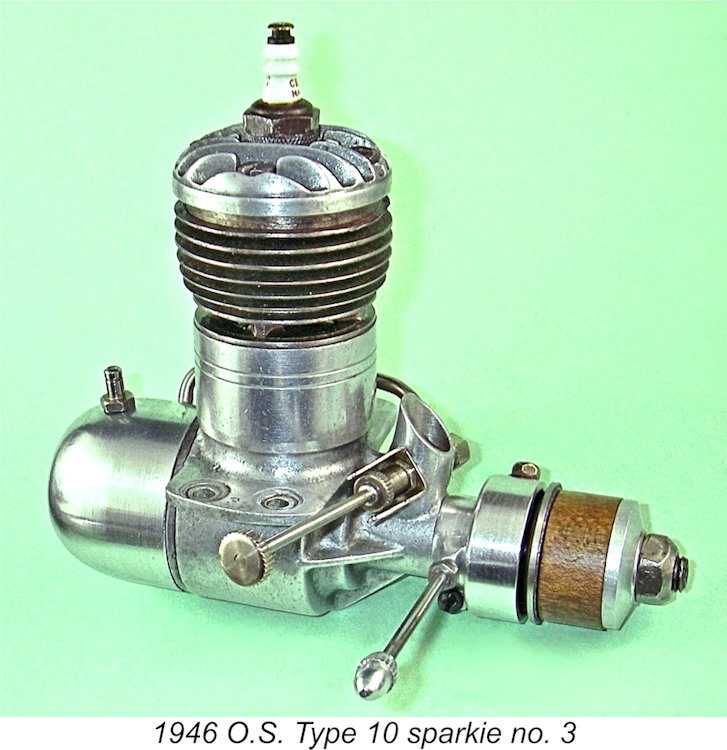
Taking full advantage of the opportunity presented by the massive post-WW2 American presence in Japan, the now 28-year-old Ogawa lost no time in re-establishing his Osaka factory on a larger scale. By 1946 he was back in full production with a 9.72 cc crankshaft front rotary valve (FRV) model - the O.S. Type 10. It is a fine example of this model which is available to me for review and test. The O.S. Type 10 Sparkie – Description
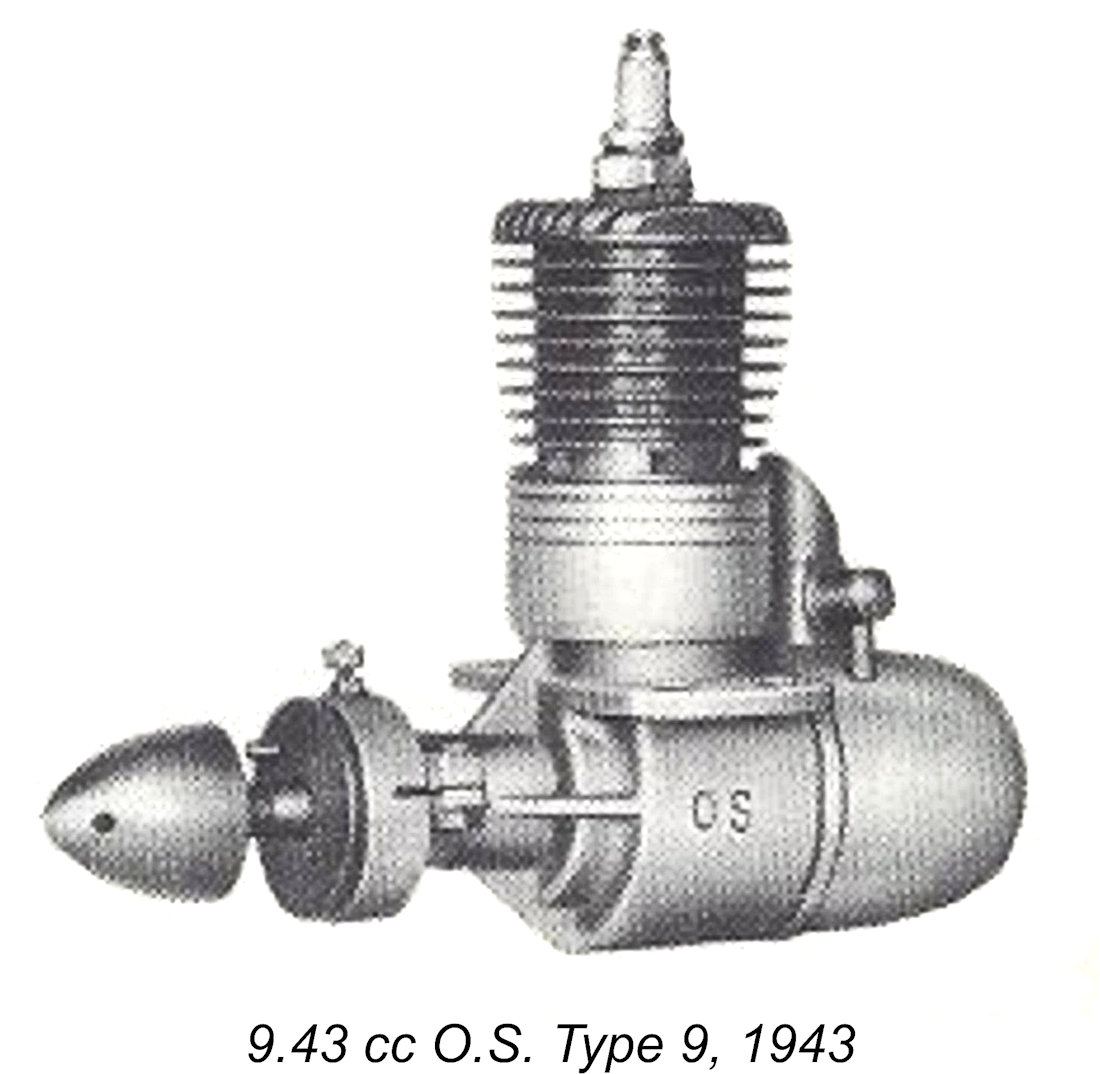
Let’s begin with the tale of the tape. The O.S. Type 10 featured near-square bore and stroke measurements of 23.0 mm and 23.4 mm respectively for a displacement of 9.72 cc (0.593 cuin.). The bore was the same as that of the 1940 O.S. Type 6, but the stroke had been increased from the Type 6’s 22.6 mm to raise the displacement from 9.39 cc to 9.72 cc. The Type 10 weighed in at 339 gm (11.96 ounces) in spark ignition form, almost identical to the 334 gm (11.8 ounces) of its Type 6 predecessor. Far from being a further development of the Type 6, the Type 10 was a completely revised design, actually appearing to be a development of the previously-illustrated wartime Type 9. Instead of the cross-flow loop scavenging of the Type 6, Type 7 and Type 8 models, both the Type 9 and Type 10 featured radial 360º cylinder porting. This was probably introduced to allow the use of a screw-in cylinder, thus simplifying construction. A further modification seen in the Type 10 was a switch from rear valve (RV) induction to a crankshaft front rotary valve (FRV) arrangement.
The bypass arrangements were parallel to those adopted later by Charles Brebeck in his OK Cub models. The female cylinder installation thread in the upper crankcase was interrupted by four generously-dimensioned bypass channels which supplied mixture to an unthreaded circumferential passage surrounding the cylinder at transfer port level. This arrangement ensured that the transfer ports were supplied regardless of the position in which the cylinder ended up after tightening. The cylinder was topped with a finned cast alloy cylinder head which was secured by four machine screws. The compression ratio was set by the designer at a checked 6.5 to 1 – an increase over the 5 to 1 ratio used in the pre-war Type 6. The head was centrally tapped to accommodate the spark plug. The usual standard Japanese plug thread at this time was M10x1.0, but my example features a standard American 3/8-24 plug installation thread, perhaps at the request of an American customer. This thread is definitely original - a 10 mm thread re-tapped to 3/8-24 is invariably a bit "loose", whereas this thread is a very snug fit. It obviously facilitated this example's subsequent use in glow-plug form, which must post-date 1947 given that the glow-plug only appeared commercially in November of that year. Although the engine's bypass/transfer arrangements would work well regardless of the cylinder's orientation, the placement of the tapped holes for the cylinder head attachment screws suggests that the designer specifically intended the four columns of metal separating the exhaust ports to be positioned fore-and-aft and at 90° laterally when the cylinder was screwed firmly home in the case. This would ensure the fore-and-aft alignment of the cylinder head fins. It would also result in the portions of cylinder wall traversed by the ends of the gudgeon pin being uninterrupted, thus precluding any possibility of the pin fouling the cylinder ports. Finally, it would align the transfer ports with their respective bypass passages. If this was in fact the design arrangement, it would have complicated the engine's assembly to a significant degree. The required alignment of the screw-in cylinder when fully tightened down could only be ensured either by selective fitting to identify compatible crankcase/cylinder combinations or by trial-and-error shimming. Regardless of how it was achieved, my engine displays this alignment precisely when firmly tightened down.
The steel prop driver was keyed to a square section of shaft in front of the main journal. The timer cam was formed integrally with the front section of the crankshaft journal. The timer (superbly replicated on my example by Peter Valicek) was of the conventional enclosed type. The fuel system was fairly typical of Japanese engines of the period. A rigid externally-threaded needle valve was employed, with a two-sided leaf spring tensioning clip. It appears that flexible fuel tubing was not available in 1946 Japan, since the fuel line was formed in 3 mm O/D copper tubing which was nickel-plated. A metal back tank of ample capacity was fastened to the backplate with a single central machine screw. That’s about all that I can tell you about this engine’s physical characteristics. I did take it apart many years ago, but that was well before the commencement of my latter-day career as an engine historian! That being the case, I didn’t take any photos at that time, confining myself to a few rough notes, the contents of which are reflected in the above description. In its present reassembled form, the engine is so well settled and so leak-free that I have elected not to disturb it further. All that I can tell you is that this engine exhibits a standard of quality which would do any contemporary American or British manufacturer proud, especially where it counts.
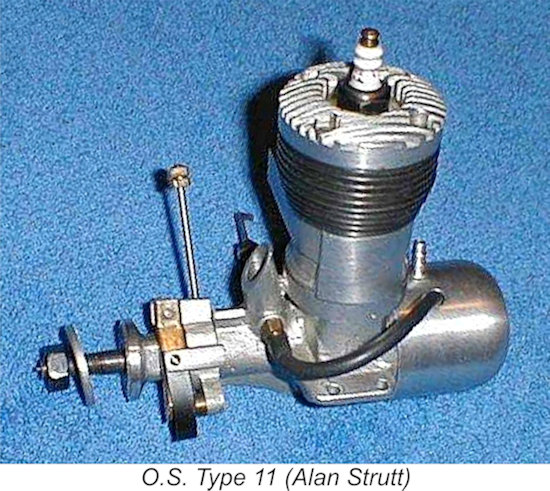
Encouraged by the success of the O.S. Type 10, Ogawa pressed on with his development work. Later in 1946 he introduced the 9.31 cc Type 11, which reverted to cross-flow loop scavenging and featured short-stroke internal geometry (23.2 x 22.0 mm) along with a side-stack exhaust - clearly an American-influenced design. The Type 10 model was supplanted in 1947 by a modified FRV variant of 9.85 cc displacement called the Type 12 which retained the radial porting and most other design features of the Type 10 but also went to slightly short-stroke It will be apparent from this discussion that the O.S. Type 10 had a production life of only around one year, also being manufactured at a time when the company’s production capacity was still very much in recovery mode from the effects of WW2. This being the case, the number of examples manufactured was not particularly large. The engine is relatively rare today - I was extremely lucky to acquire and subsequently complete my near-pristine example. It appears that the O.S. Type 10 engines may have displayed serial numbers. All that I can report in this regard is that my example of the Type 10 displays the number 3 neatly stamped onto the upper surface of the right-hand mounting lug. Of course, this may or may not be a serial number, but if it is, then my engine appears to have been the third example off the line! So now we know something of the history and design of the O.S. Type 10. Next question – how does it run? Let’s wake up the neighbours and find out! The O.S. Type 10 FRV Model on Test Despite remaining in near-pristine external condition, my example of the O.S. Type 10 has clearly done a fair bit of running in the past, including some time spent being operated in glow-plug mode. That mode of operation is somewhat harder on the engine’s components than running on spark ignition, but the engine had held up well. Its excellent all-round condition implied that it had been very respectfully treated. Compression was very slightly leaky, but nothing to worry about. All bearings were free from excessive play. This being the case, I had no worries about giving this 80-year-old unit a series of runs in spark ignition mode. It was clear that the engine was well past the break-in stage, so I would be able to keep running time down to the minimum necessary to assess the engine's performance characteristics. Just as well in view of the anticipated noise factor!
Set up in the test stand, the engine felt pretty good when flicked over, seemingly all ready to go. Since I had no idea regarding the needle setting, I simply set it at 2½ turns open and hoped for the best! The timer function checked out perfectly using a continuity tester, so I hooked up the ignition system and set the timer for around 10º before Top Dead Centre.
Once running, the engine settled down to a nice smooth four-stroke mode of operation on a still-retarded ignition timer. I decided to run a couple of tanks of fuel through it at this setting just to settle it down after a long layoff. While doing so, I tried a little experimental fiddling with the timer and needle valve settings, finding that response to both controls was very positive and progressive. Starting remained extremely good throught the test, while the screw-in cylinder displayed no tendency to unscrew itself during operation. After allowing the engine to absorb a few tankfuls of fuel while getting settled in once more, I refilled the tank once more, re-started the engine and tried leaning it out while advancing the ignition timing to find its best speed on this prop. The engine responded very positively to these adjustments, speeding up to a generally-smooth two-stroke mode of operation. I use the word "generally" here because things were not perfect - on this prop at least, the engine had a bit of a tendency to "hunt" (vary its speed), occasionally behaving as if the mixture was changing slightly with Regardless, the engine showed itself to be a quite powerful runner, turning the TF 12x6 Power Point wood prop at an impressive (and very noisy!) best speed of 7,700 RPM - a major improvement on the 5,000 RPM achieved on the same prop by the O.S. Type 6 replica. This implies an output of somewhere around 0.398 BHP at that speed - not bad for a 10 cc sparkie of 1946 vintage running on white gas! It also implies that the 12x6 airscrew is probably an ideal match for the engine. Apart from the very high noise level, I also noticed that the engine was getting extremely hot while running. This leads me to believe that this is one classic sparkie which might benefit significantly from being run on a methanol-based fuel, since those fuels run considerably cooler while also tending to generate a little more power. It would also appear advisable to keep the needle a little on the rich side. Those comments take nothing away from the fact that the O.S. Type 10 was found to be a very well-made engine which started easily and ran well with plenty of power on tap by then-current standards. It would have been a completely satisfactory engine to use, the main downside being that extremely assertive exhaust note! Conclusion I hope that you've enjoyed making the acquaintance of the engine with which the O.S. model engine manufacturing enterprise resumed its commercial activities following the unhappy interlude of WW2. The O.S. Type 10 was a quality product which reflected very positively upon the design abilities and commitment to quality of its talented designer Shigeo Ogawa. He came up with an easy-starting unit which was well able to speak for itself (literally!) in terms of its performance. It also re-established the standard of quality which was to be upheld by the O.S. model engine range for many decades then still to come. Yoku yatta, Ogawa-san!! ___________________________ Article © Adrian C. Duncan, Coquitlam, British Columbia, Canada First published July 2026
|
 reproduction of its 0.57 cuin. (9.39 cc)
  The
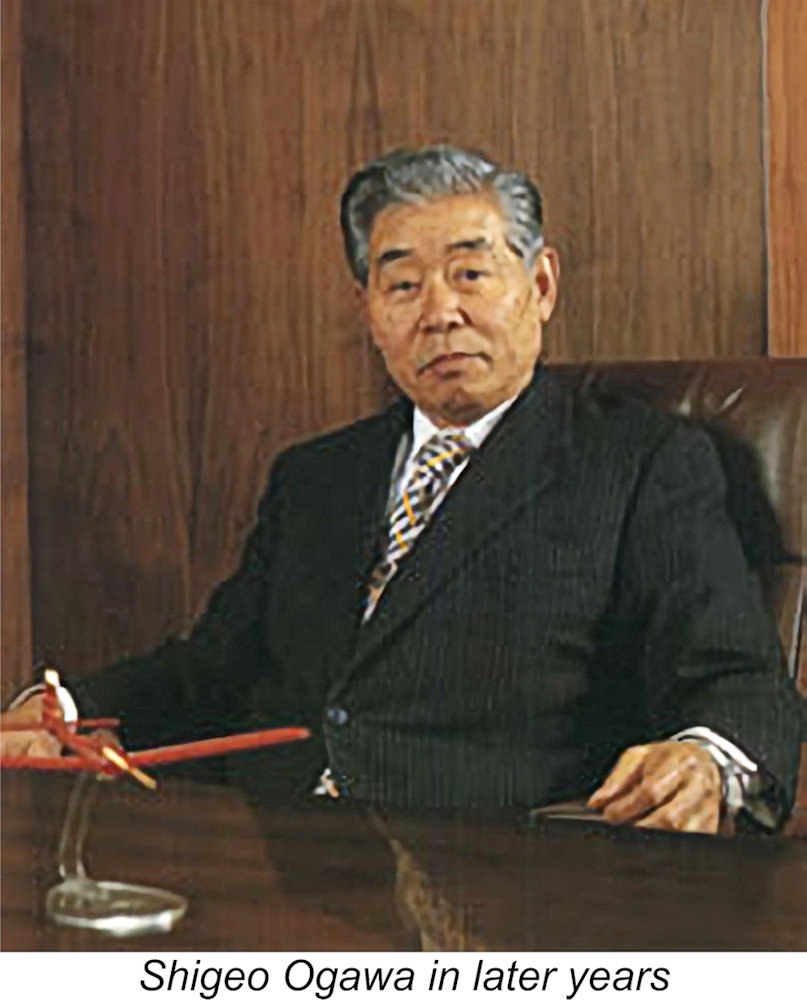
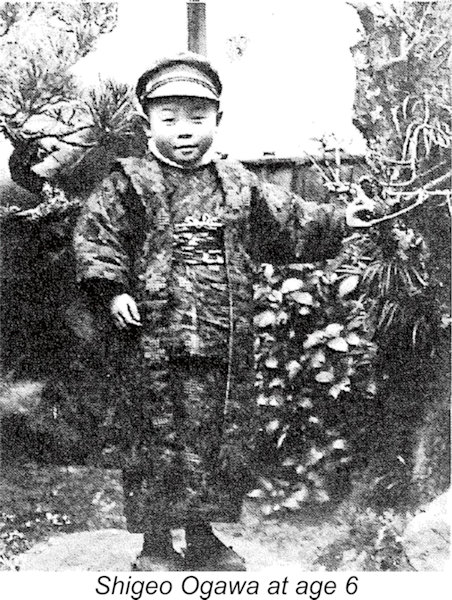
The 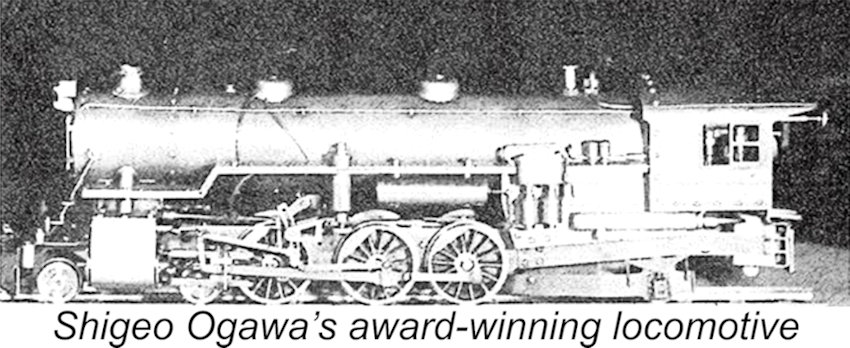 Following his graduation from the Osaka Municipal Technical School in 1936, while still in his teens, Ogawa somehow scraped together enough money with the gratefully-acknowledged help of his very supportive mother to buy a lathe and drill press. The lathe and related equipment were reportedly purchased for 100 yen (around US$29.00 at the then-prevailing exchange rate)! Using this very basic equipment, Ogawa began making model steam engines and live steam locomotives, an interest which he was to maintain throughout his working life. By this time, he had become a skilled machinist. His steam engines soon began to sell quite well.
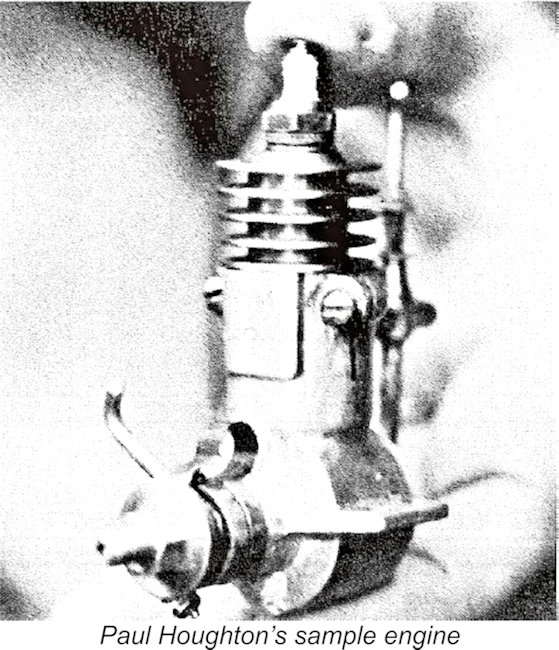 Houghton showed him a small American spark ignition gas engine, suggesting that Ogawa might try making such an engine himself. Can any reader identify this engine? I can't ............
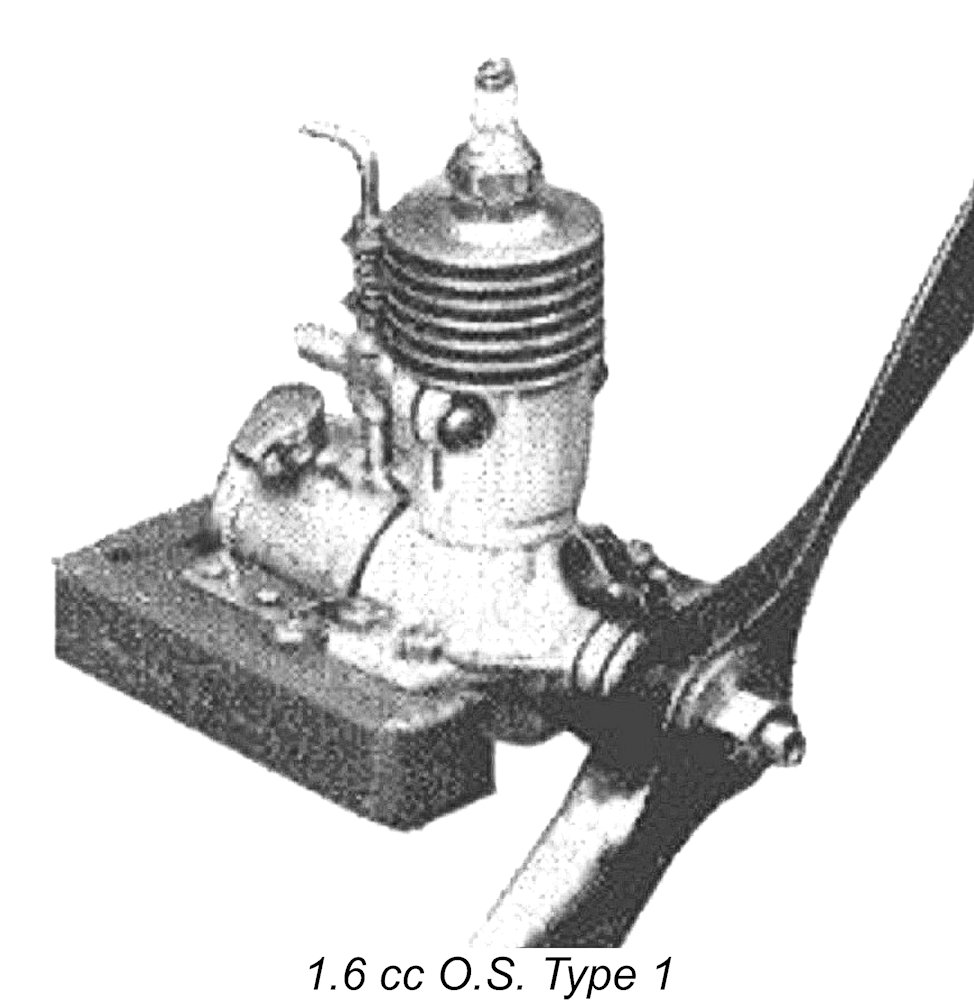 Japanese modellers and from others that in 1937 the 20-year-old Ogawa was encouraged to initiate the broader commercial establishment of his range using the O.S. trade-name. This trade-name arises from the fact that in the Japanese language the family name is always placed before the personal name - hence, the letters O.S. are simply Shigeo Ogawa’s initials placed in their Japanese order.
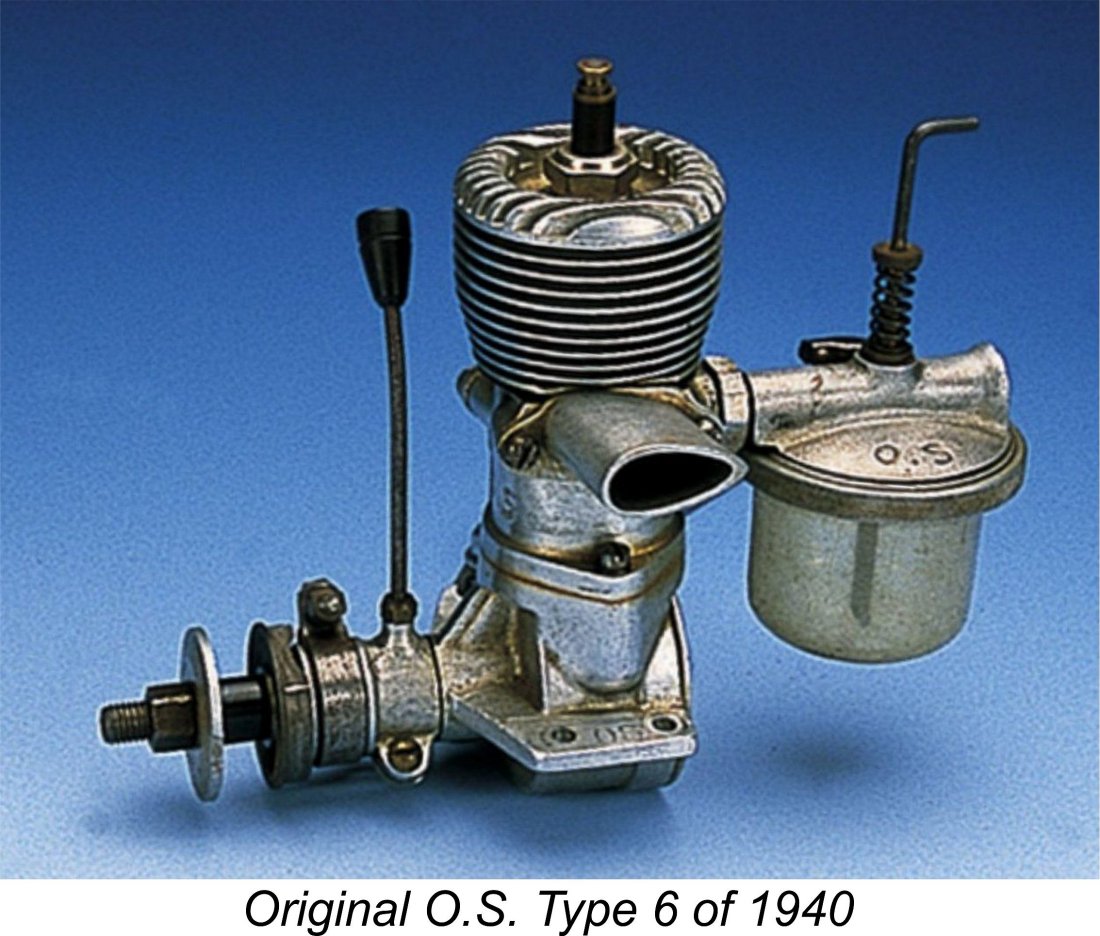 The continuing positive reception of his first engine soon encouraged Ogawa to expand both his fledgling range and his production capacity beginning later in 1937. By 1941 he had designed and put into limited production a series of spark ignition engines having displacements ranging from 4.4 cc (.27 cuin.) up to 9.5 cc (.58 cuin.). These included an impressive three-cylinder unit intended for marine use. The 9.37 cc Type 6 design which has been reviewed in detail
 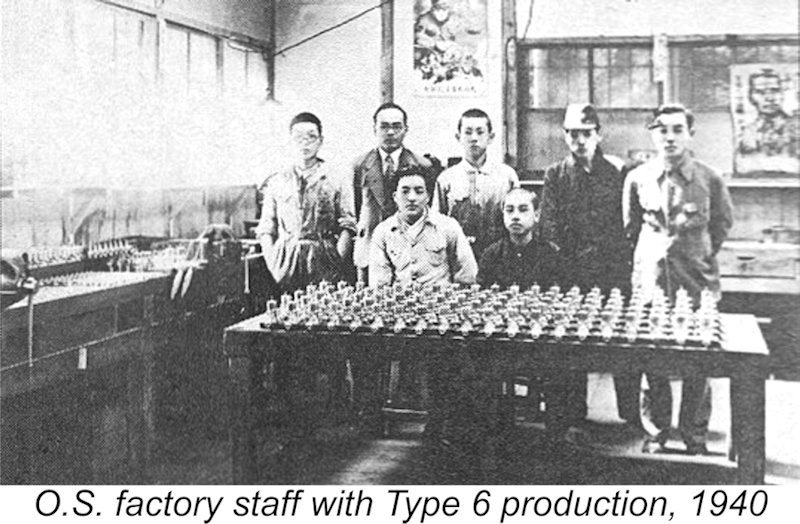 Although Japan had been actively engaged in a shooting war with China since 1937, the country’s December 7
 However, as of 1943 the tide of the war began to turn inexorably against Japan, increasing the military demand for additional manpower. This resulted in the 26-year-old Shigeo Ogawa being conscripted into the Japanese military in September 1943 despite his relatively weak physique which fell short of meeting requirements for active combat service. However, the fact that he held a driving license (apparently a somewhat unusual qualification in Japan at the time) and had engineering experience led to him being assigned to front-line service as a driver in the military engineering corps. Although he survived this experience, it was not until the fall of 1945 that he was able to return to Japan to resume commercial model engine manufacture.
 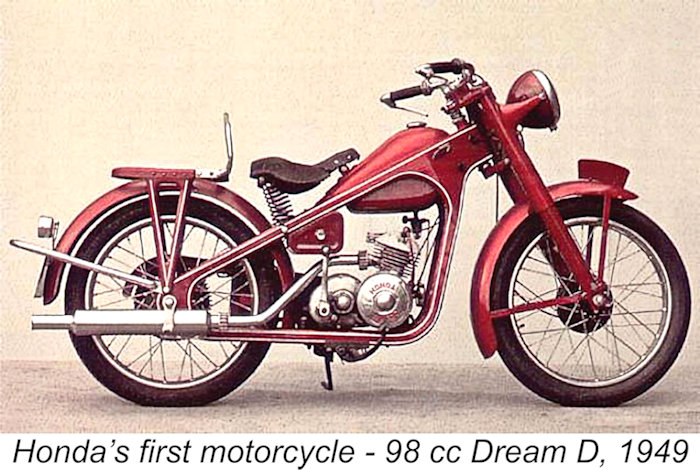 As is well known, Honda quickly established what was to become the world's leading motorcycle manufacturing company. Interestingly enough in view of his later commitment to four-strokes, Honda's first motorcycle of 1949 was a 98 cc two-stroke - some Ogawa influence, perhaps?!?! For his part, Mabuchi founded the famous
 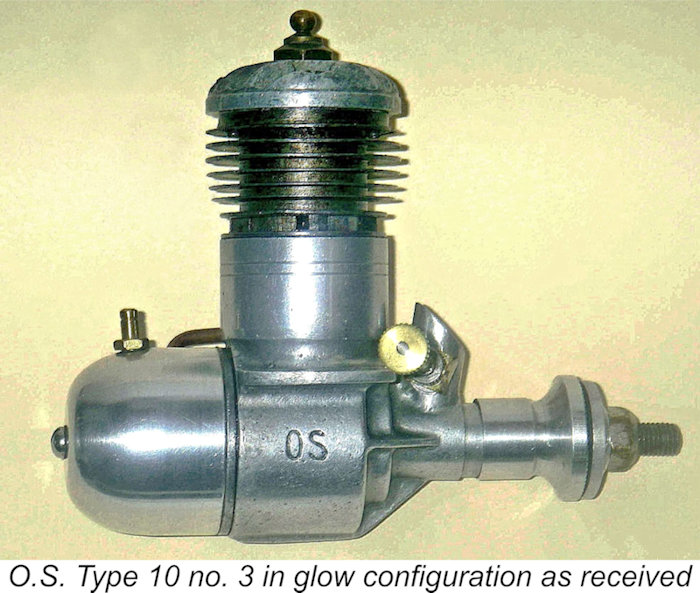 I’ve owned the illustrated example of the O.S. Type 10 for many years now, although I'd never run it previously. When I acquired it (likely at a long-forgotten MECA swap meet at least four decades ago), it had lost its timer and had been fitted with a very well-made aluminium alloy prop driver to allow its operation in glow-plug configuration, as seen at the left. It has since been restored to its full spark ignition glory by being fitted with a faithful replica timer and prop driver superbly made by my mega-talented mate Peter Valicek of the Netherlands.
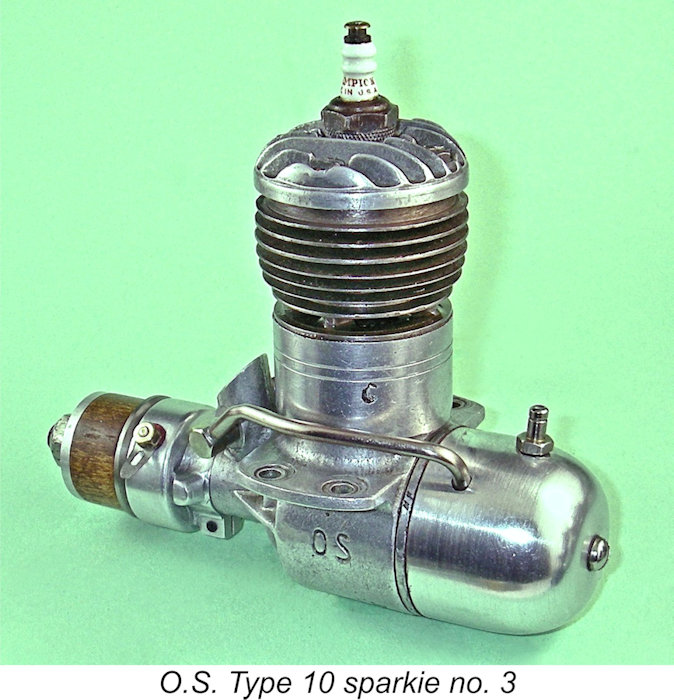 The lapped ringless piston was also made from cast iron. Cylinder porting included four sawn exhaust slits with relatively narrow columns of material between them. The transfer ports took the form of four similar sawn slits located directly below the exhausts. This arrangement had the downside of precluding the provision of any overlap between the exhaust and transfer ports, thus enforcing the use of a relatively long blowdown period. By way of compensation, the total area of the transfer ports was quite large.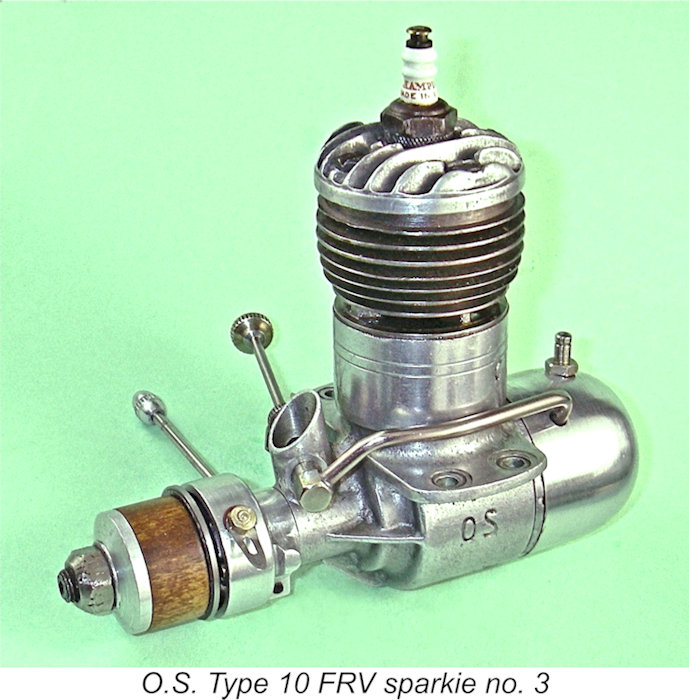
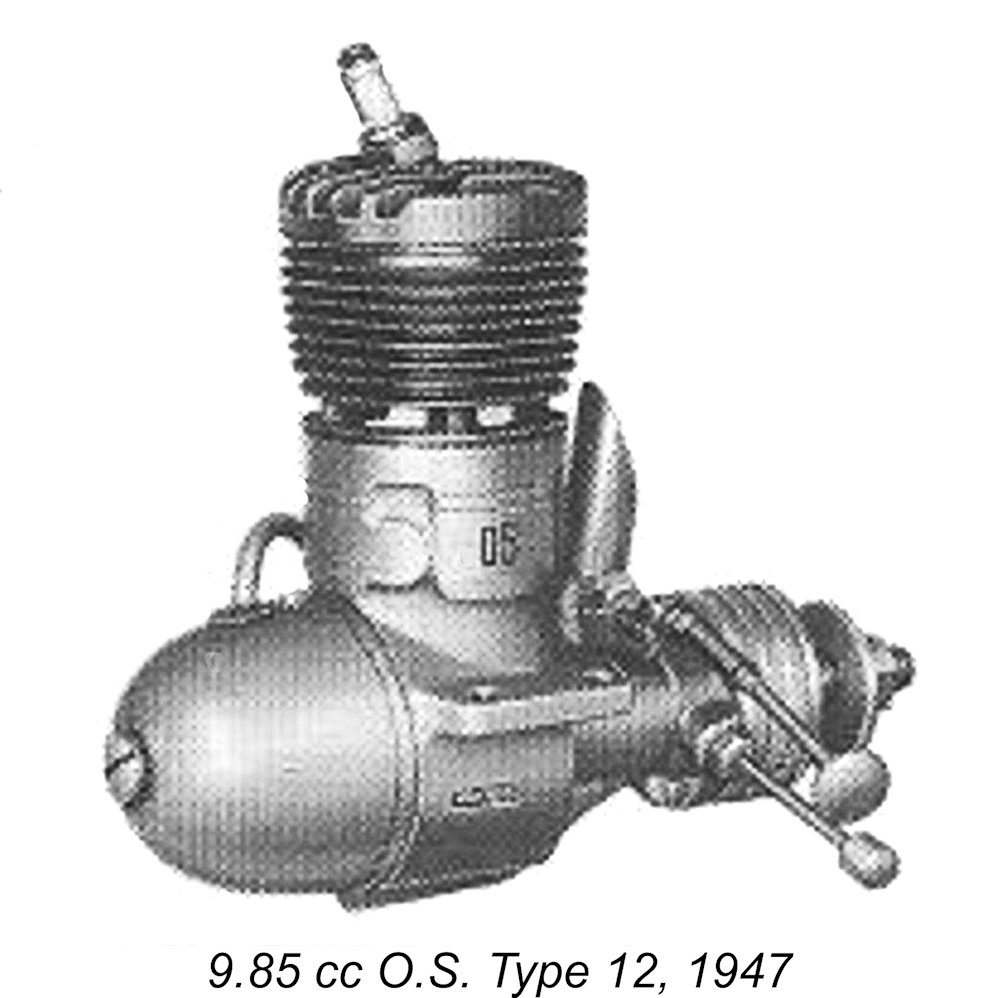 geometry (23.5 x 23.0 mm) along with a few
 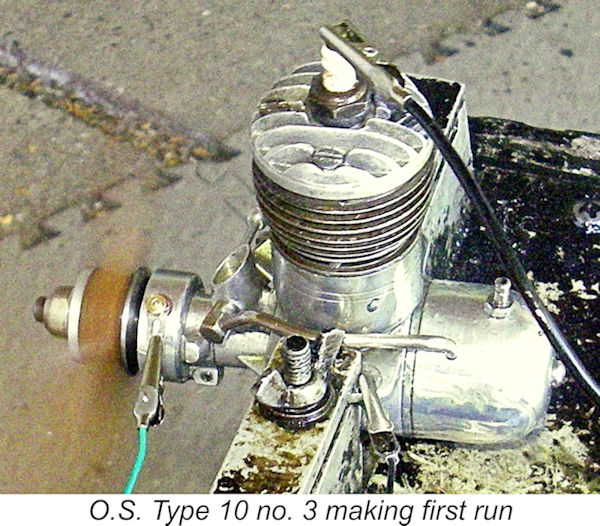 For this test, I elected to use my standard “early sparkie” fuel consisting of 75% Coleman Camp Fuel (white gas) and 25% SAE 60 mineral oil (AeroShell 120) - most Japanese users in 1946 would have used such a brew. The sparks were supplied by the ever-dependable Larry Davidson SSIGNCO unit described in my separate article on
 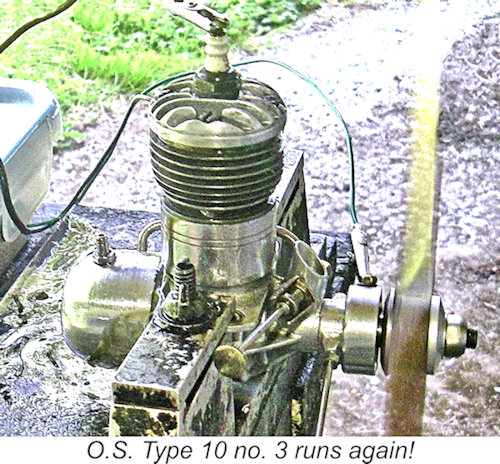 After putting on a couple of choked turns to fill the fuel line, I sent a drop or two of fuel down the intake, administered a modest exhaust prime, donned my industrial-grade earmuffs, switched on the ignition and went at it! The engine quickly earned my respect and affection by bursting into ear-shattering life on the second flick! It turned out that I’d guessed the needle setting almost exactly – in fact, I could close it down a quarter turn and still maintain a smooth four-stroke mode of operation. I must say though that I was very glad of those earmuffs - the level of noise produced by this engine was truly spectacular! The neighbours must have loved me!
 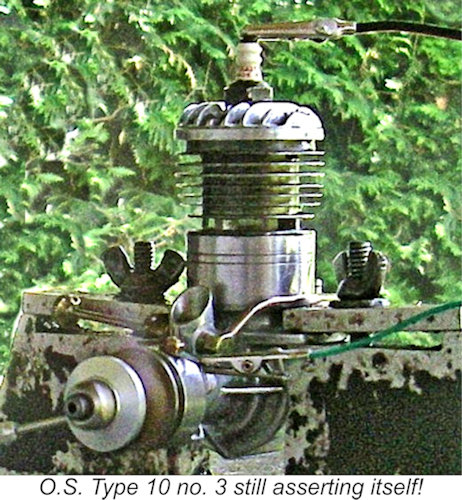 no adjustment of the needle. I put this down to what appeared to me to be an excessively large 8.5 mm venturi bore for the 3 mm dia. spraybar used. Perhaps on a smaller prop at higher speeds it wouldn't be so much of an issue.
| |